My Living Room Style | The Elements Behind the Look (and How to Make It Your Own)
The layered approach behind my living room design—creating a space full of comfort, style, and meaning, with elements you can adapt to your own aesthetic.
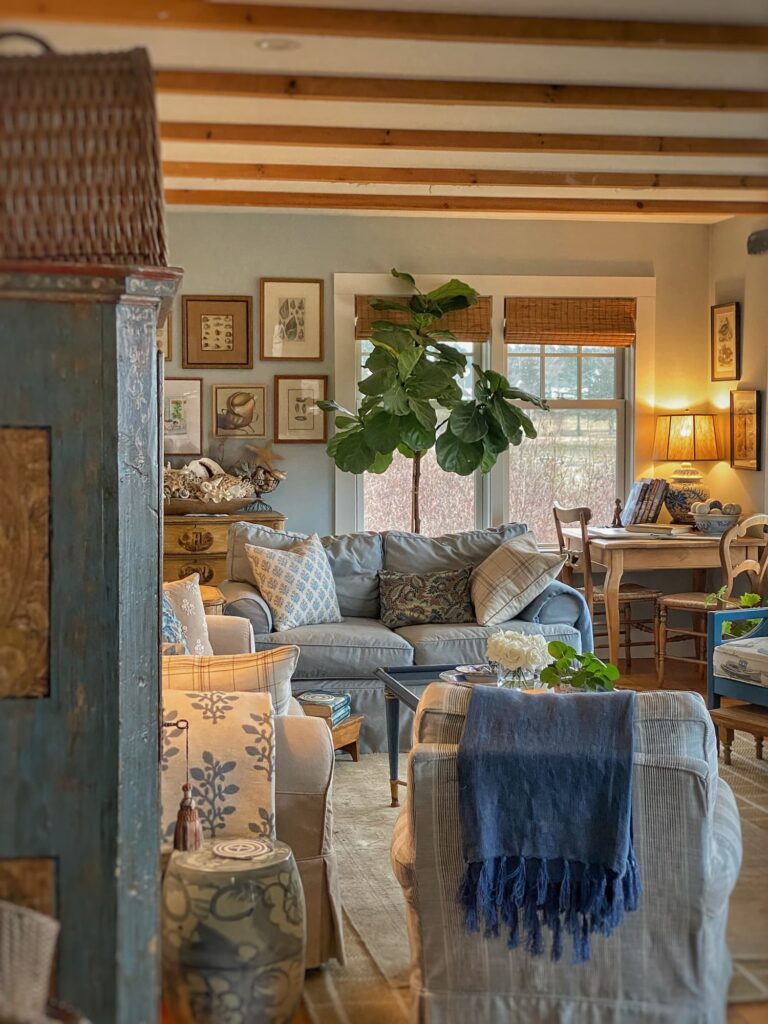
Hello friends! I am back after a week away from the blog. Since I don’t have anything new going on around the house at the moment, I thought I would take a slightly different approach today—something I’ve been wanting to write for a while.
Instead of focusing on small details or specific updates, I’m stepping back to look at how I pulled my living room together— breaking it down into the elements I combined to create that signature Molly-in-Maine look.
I wouldn’t call this a “how-to,” exactly—more a guide to the approach I use, and how you might adapt it to your own home and aesthetic.
Whether you take all of it or just one or two ideas, my hope is that this will help you create a home full of comfort, meaning and style—one that feels undeniably your own.
We’ll start, of course, with color.
1. Color
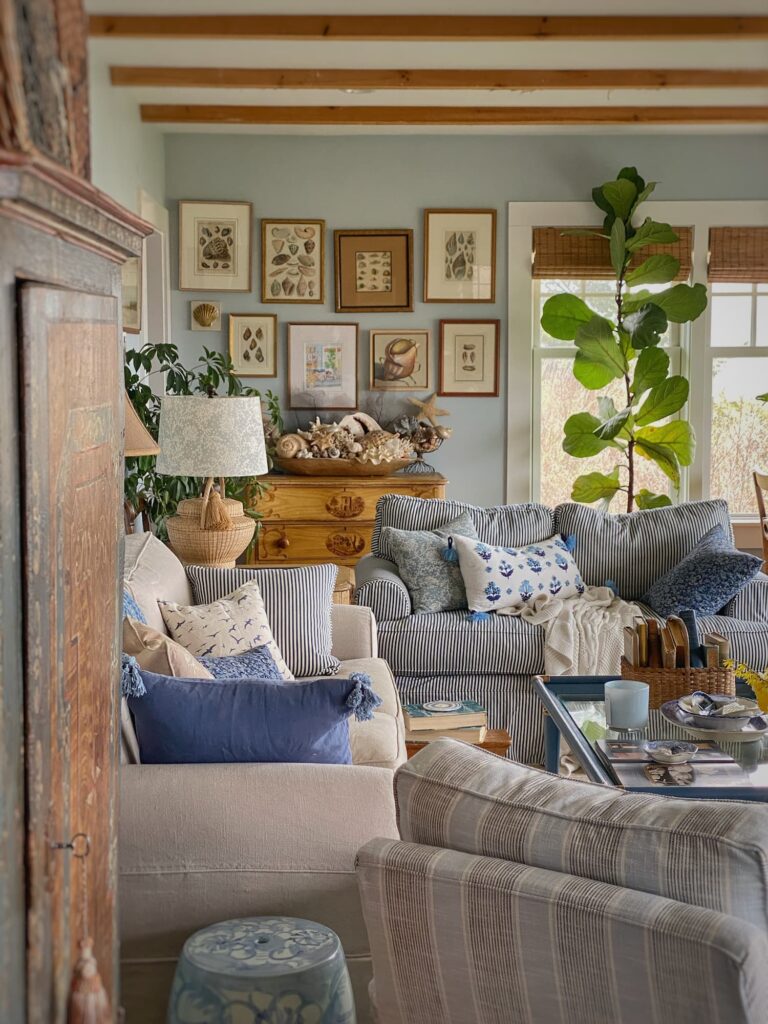
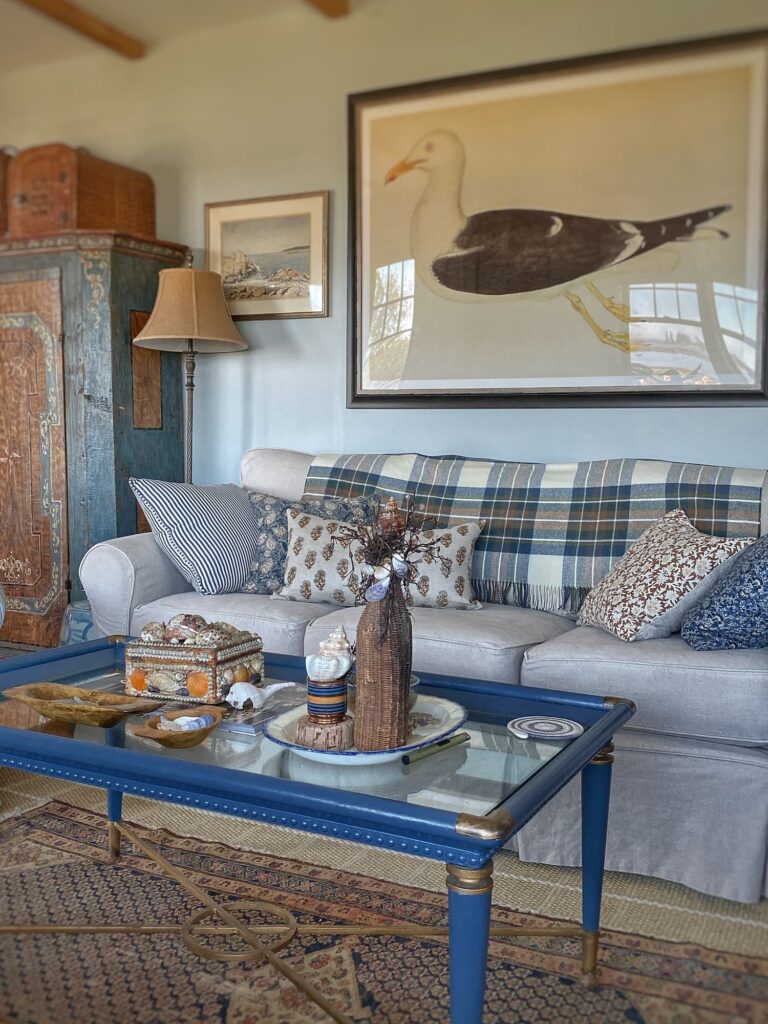
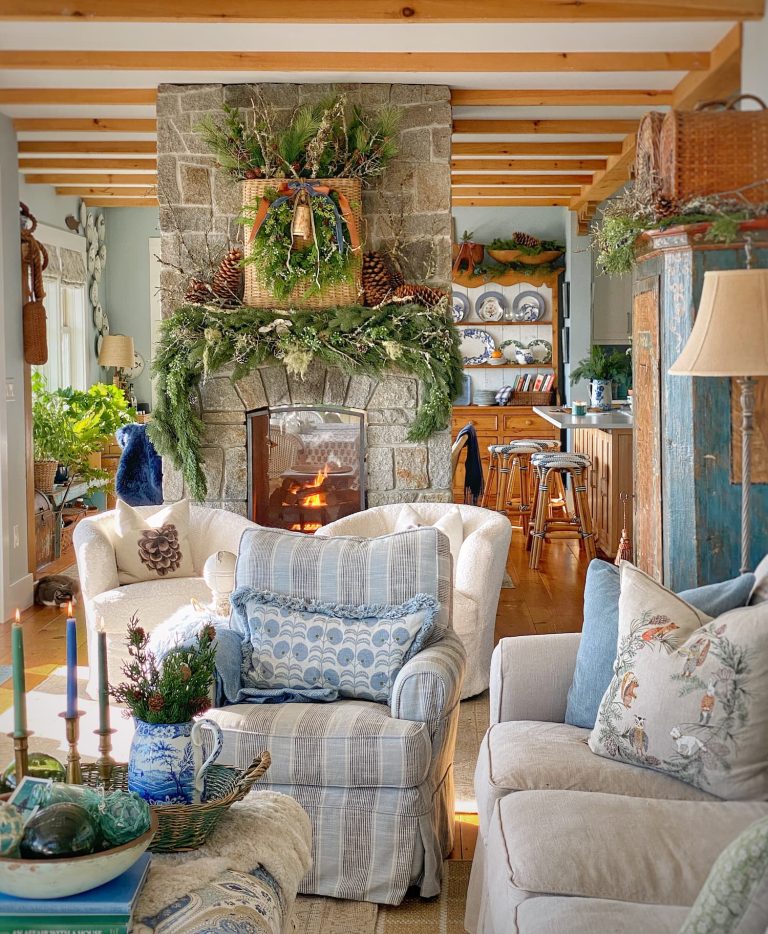
I chose a simple palette: blue as the primary color, with neutrals—beige, brown, gray, and white—for balance. These are all colors pulled from the views just outside my windows, blurring the line between indoors and out.
Choosing one color to lead, and then repeating it throughout the room, creates a sense of cohesion and calm. To keep things from feeling flat, I use a range of blues—from navy to brighter and paler tones. The neutral colors are there to complement, rather than compete.
This same approach works with other colors. If you’re aiming for a look similar to mine, choose a true color as your primary, rather than a neutral, and one you genuinely love. Then use it generously.
I’ve shared more about how I think about color and creating a cohesive palette in this post.
2. Walls
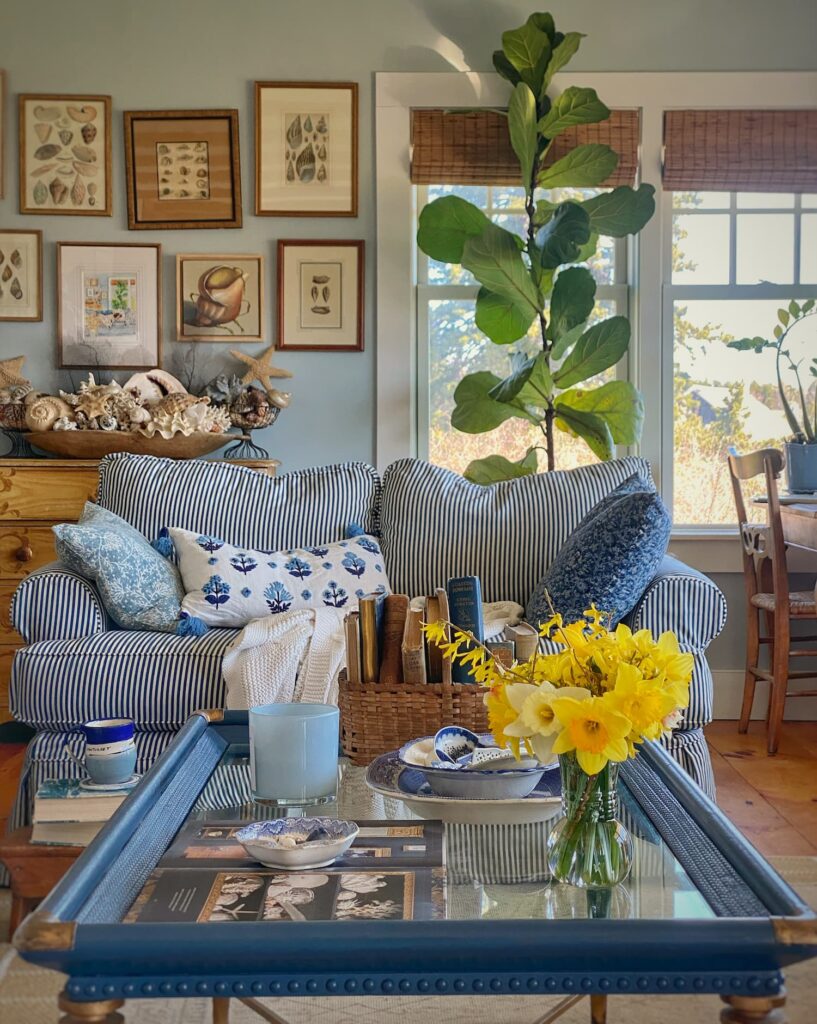
I carried that same color story onto the walls—using, of course, blue. In the open living, dining, and kitchen space, the color is Benjamin Moore Brittany Blue, a soft, understated pale gray-blue.
Colored walls add depth and warmth to a room and become part of the space, rather than just a backdrop for it.
To get a look similar to mine with your own color, choose a pale version of your primary color for the walls. I recommend a shade with a bit of gray in it to keep it from feeling overly sweet or pastel.
3. Foundation
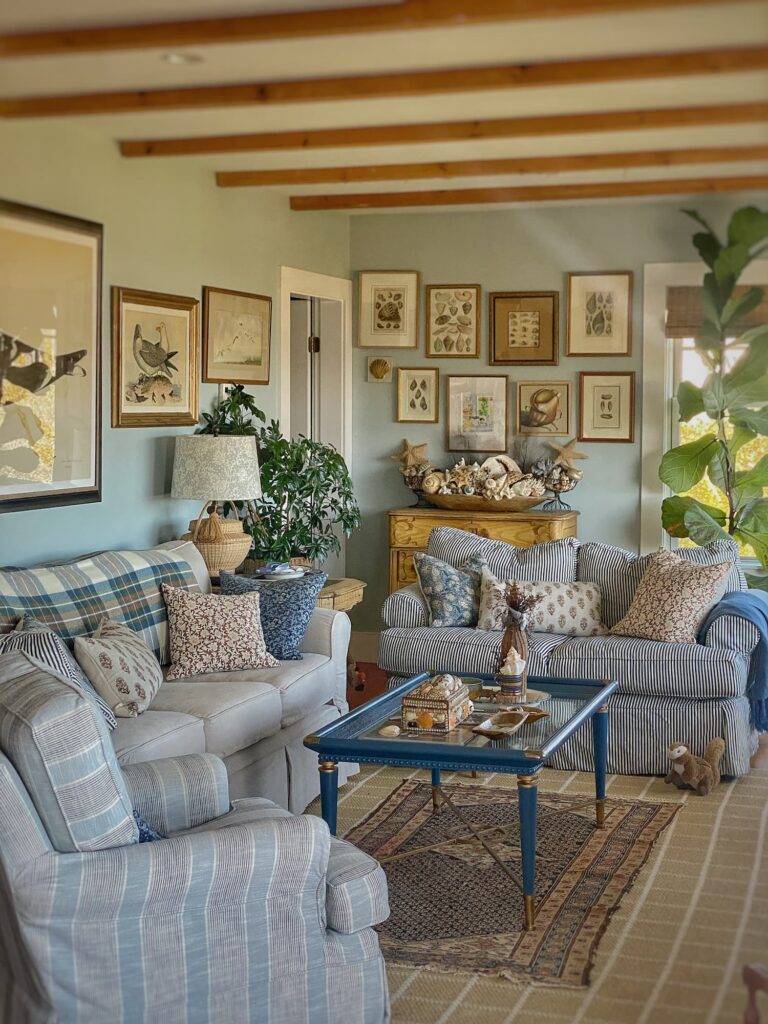
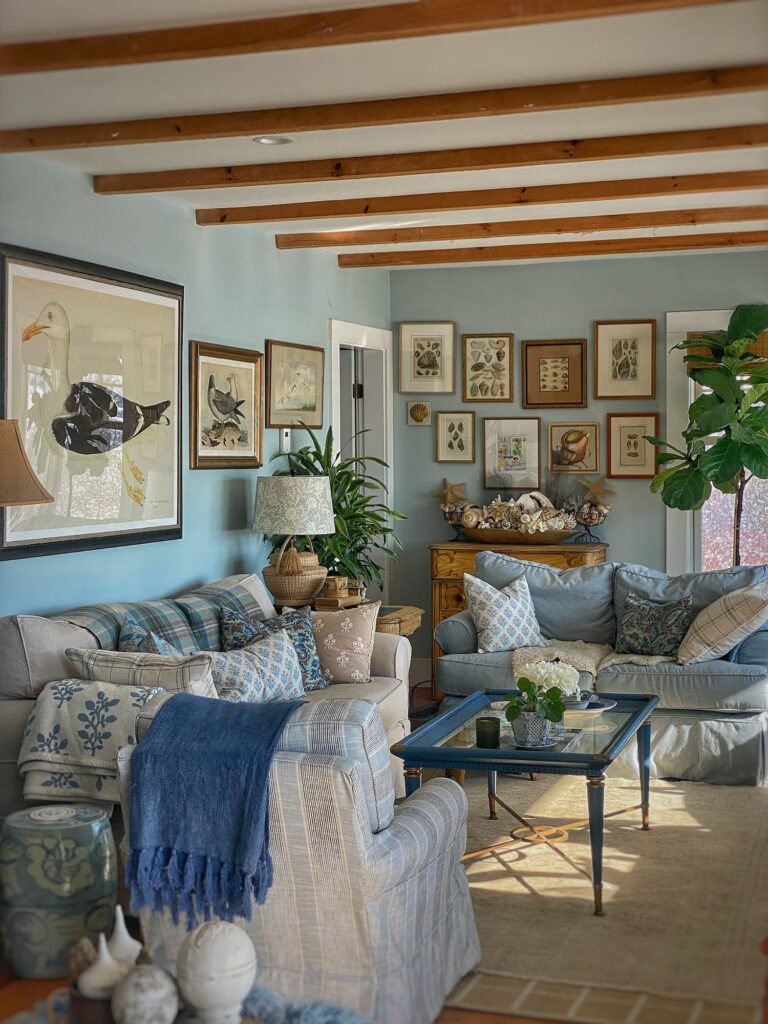
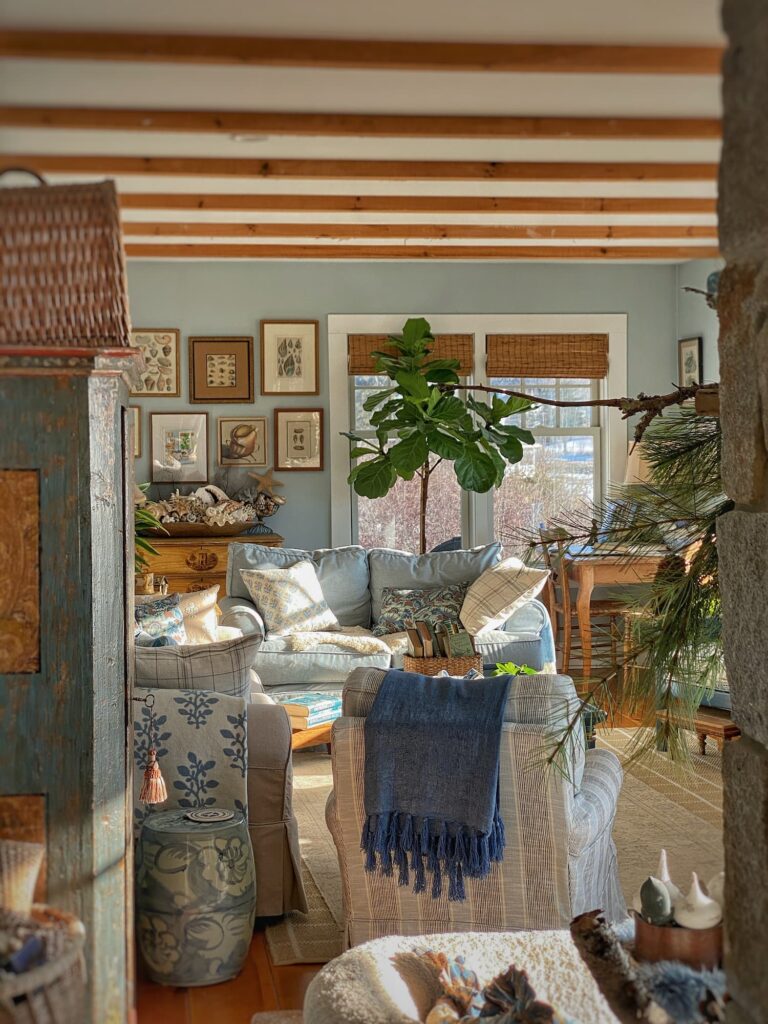
Moving on to furnishings, I kept the large upholstered pieces and the rug in the living room simple. The sofas and large swivel chair are either solid or striped, and the rug is a neutral sisal with a large graphic check pattern. The colors stay in keeping with the overall palette—blues, beige, and white, depending on the season.
You know I love pattern more than the next person, and I originally had a dramatic kiliim rug. It was beautiful, but I eventually decided it created too much visual noise. By keeping the foundation simple, I’m able to layer in pattern, texture, and accessories while still maintaining a sense of calm.
4. Pattern
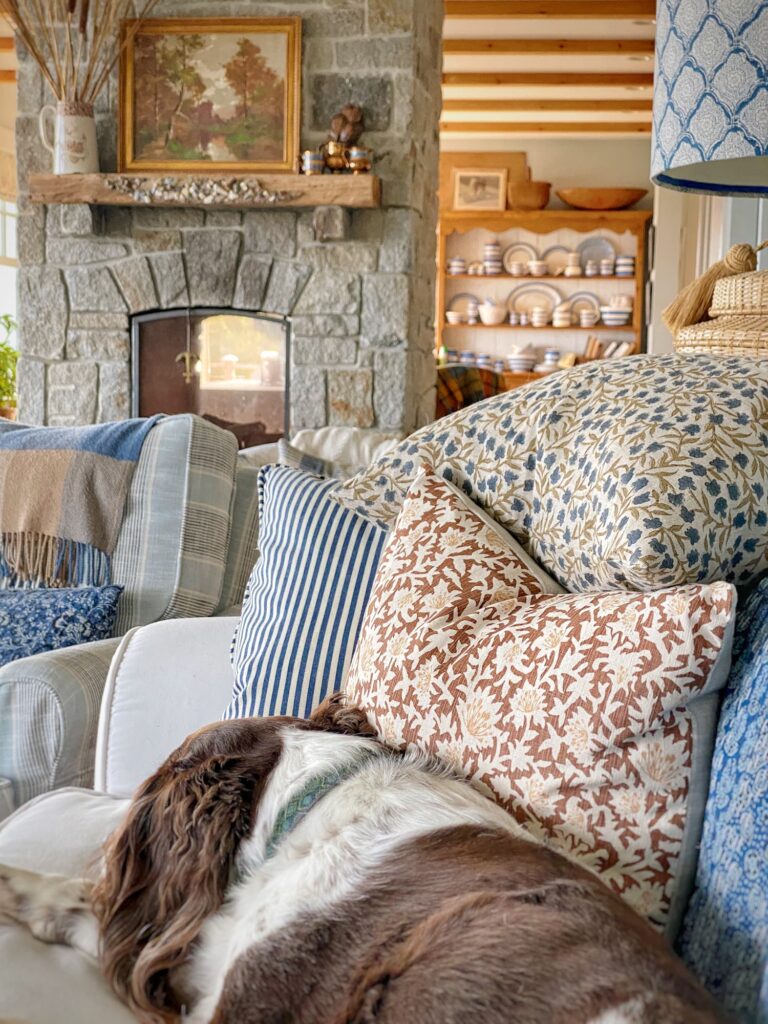
Now we get to the good stuff, and one of the hallmarks of my design style. It’s time for some pattern!
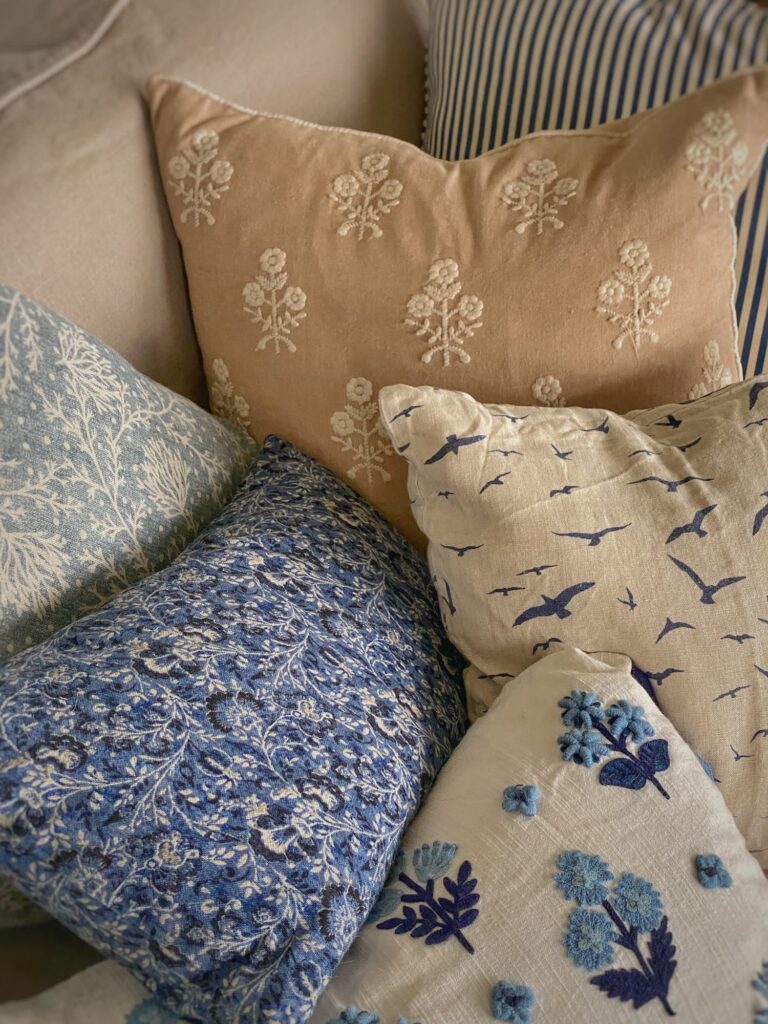
With a neutral base and color palette well established, I add a mix of patterns in pillow covers, throws, and lampshades. The occasional chairs by the windows have cushions with a nautical print, and the swivel chairs by the fireplace wear floral slipcovers in the summer. For the cooler seasons, I layer a smaller patterned Turkish rug over the sisal.
Pattern adds interest, personality, and fun to a room. Plus, it’s a great way to change things up seasonally.
When choosing patterns, lean more toward mix than match for a collected-over-time look. Keep the colors within your palette, but use different shades of your primary color. I also recommend varying the pattern size. Most importantly, go with patterns that bring you joy.
5. Texture
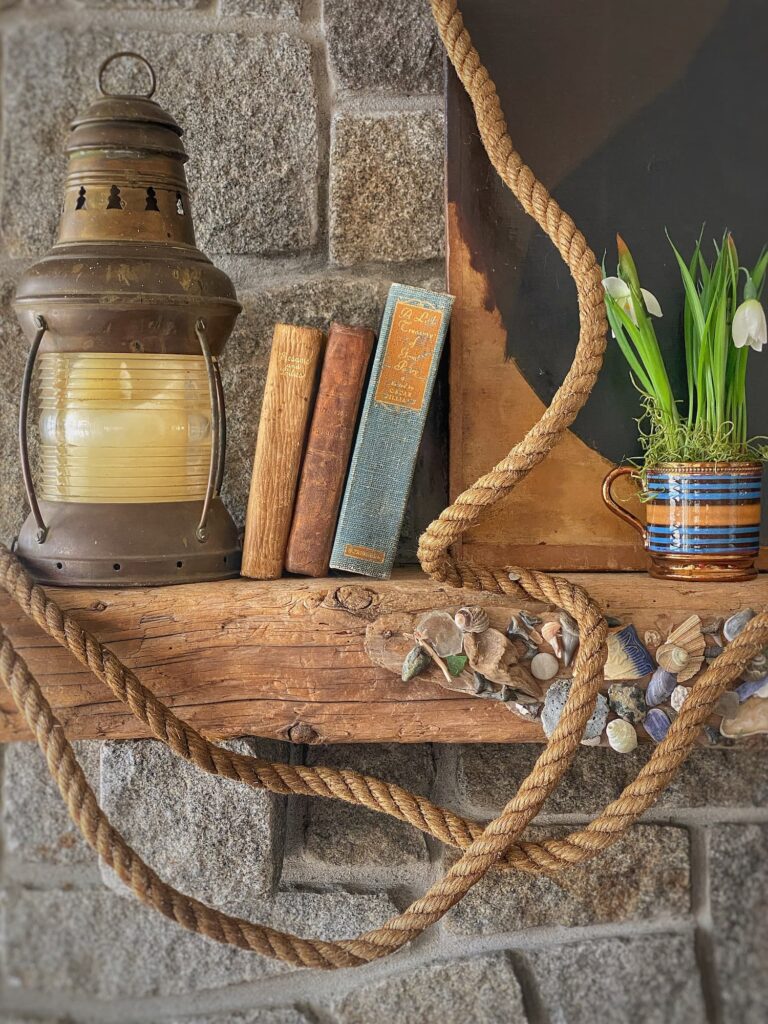

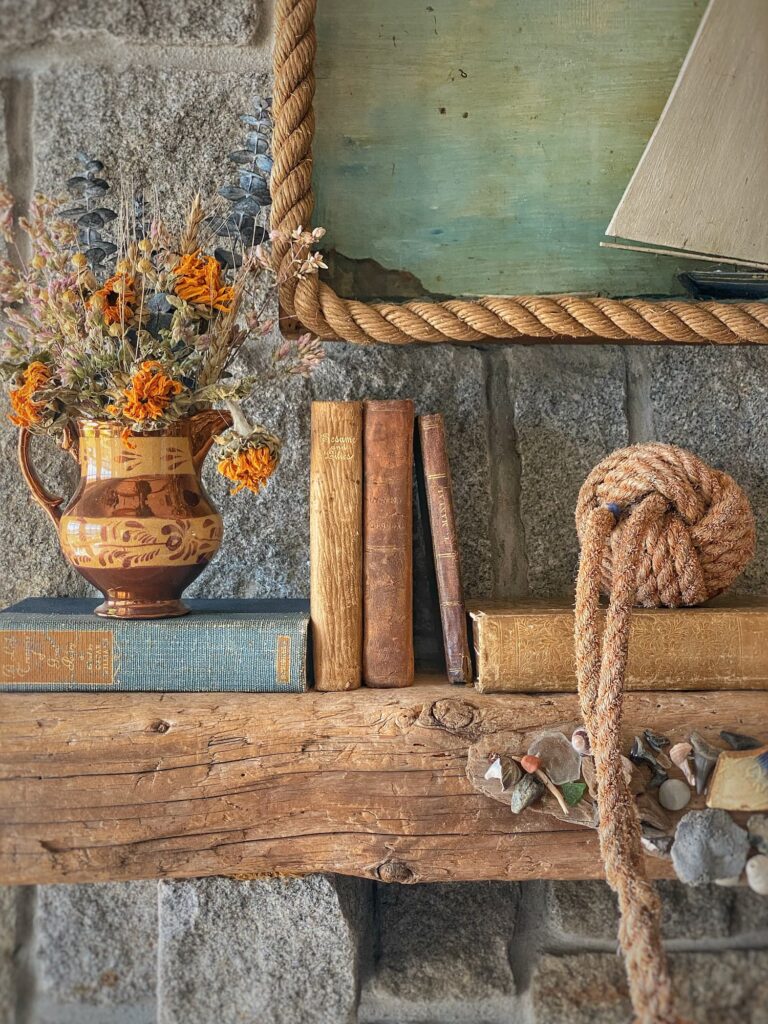
Texture is an important element in any room, but I lean into it particularly heavily in the living room.
It adds warmth and depth, creating a lived-in, homey feel. It also contrasts nicely with more polished surfaces such as glass and china.
When adding texture to your space, think wicker, worn woods, natural fiber rugs, and chippy painted finishes. But don’t forget some of the more subtle ways to bring it in—linen fabric, embroidery, a broken-in quilt, rope details, and even the well-thumbed covers of vintage books.
Trust me—it’s a game changer, so use it liberally.
6. Antique and Vintage
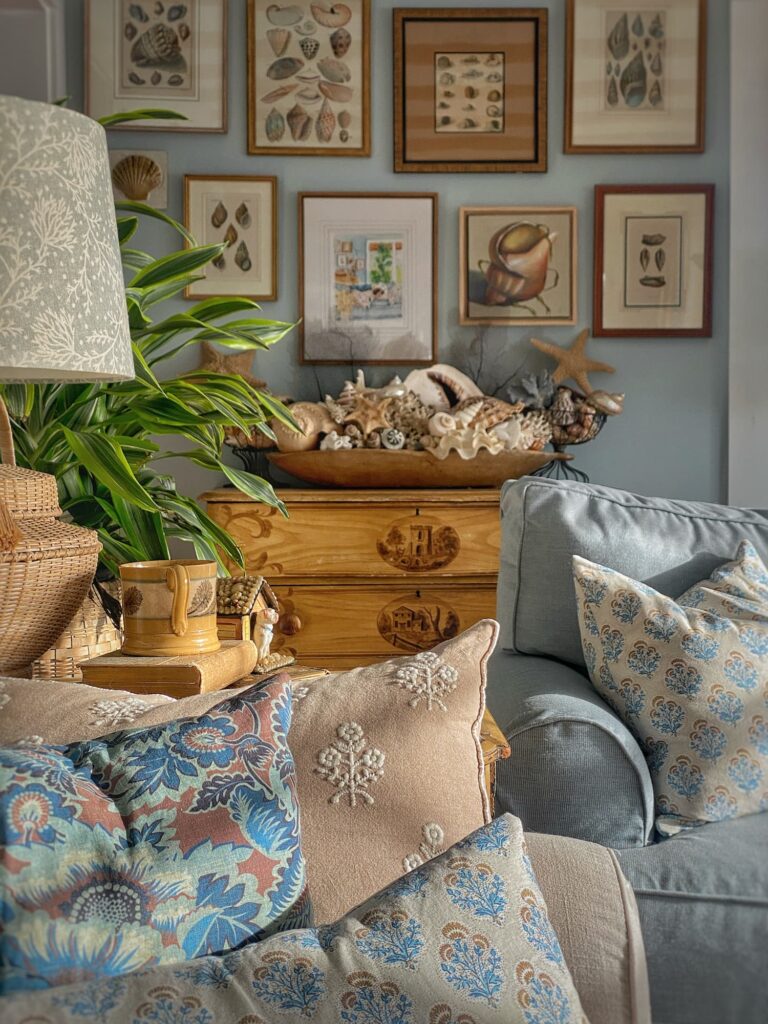
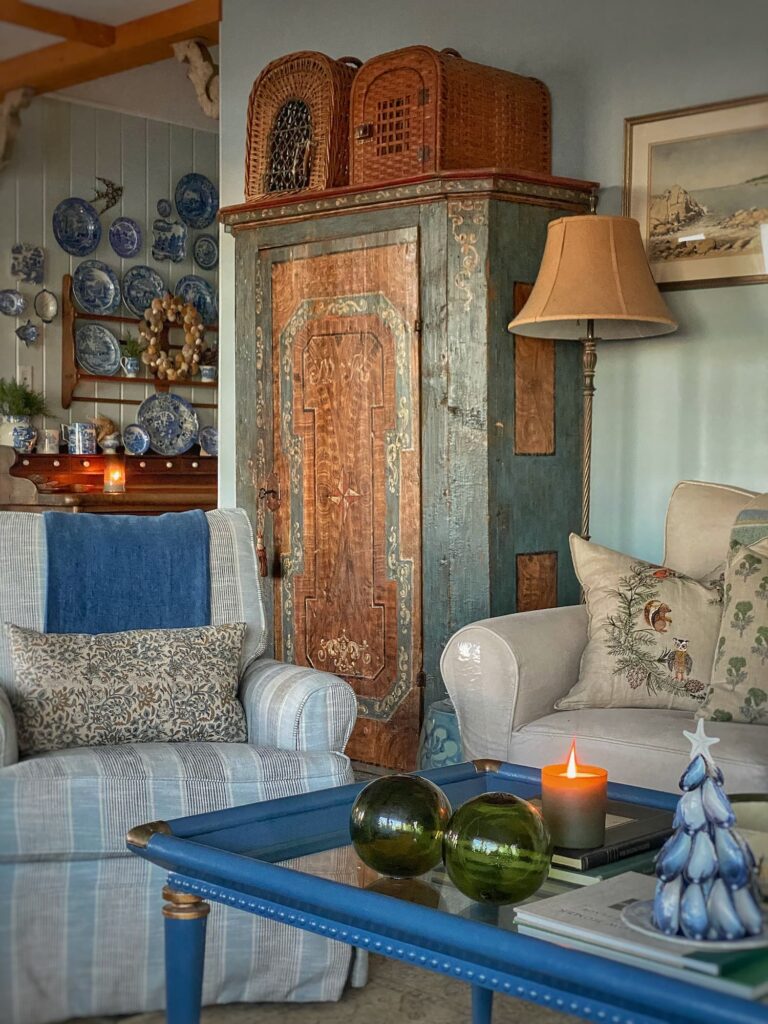
Many of the pieces that add texture to a room also happen to be antique or vintage. There is just something about the patina that comes with age.
Aside from the upholstered pieces and pillows, I would say that at least 95% of the furniture and decorative items in the living room are pre-loved—most of them for many years.
Antique and vintage furniture is generally better made and more economical than new. Each piece brings its own story and one-of-a-kind character to the space, which is a big part of what gives the room its unique personality.
As always, choose pieces that speak to you.
7. Story

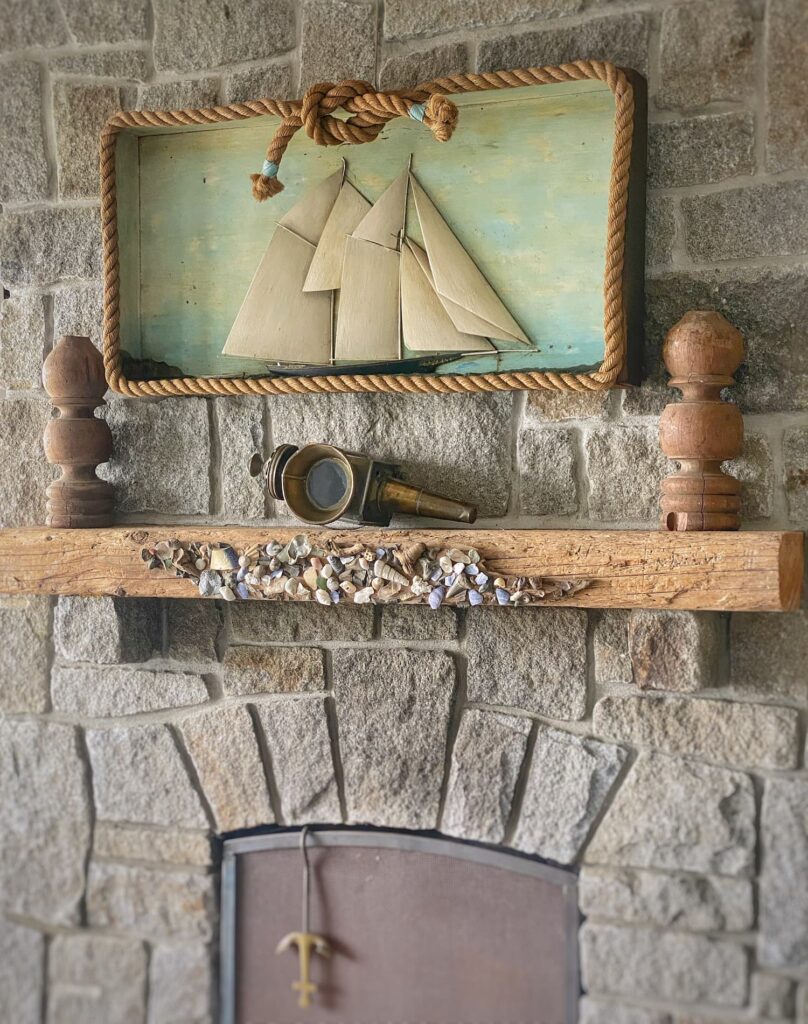
And speaking of stories, I believe that every home should tell one that has meaning to the owner.
Inspired by the landscape and culture that surround me, mine is a classic New England seaside tale. In the living room, that means sailing ships, sea birds, and shells, all with a rugged, time-worn feel, balanced by fresh colors and patterns.
I didn’t set out to choose these motifs—this isn’t a theme for theme’s sake. Instead, as I pulled the space together, these were the pieces that felt right for this home.
What story you choose is entirely your own.
8. Plants
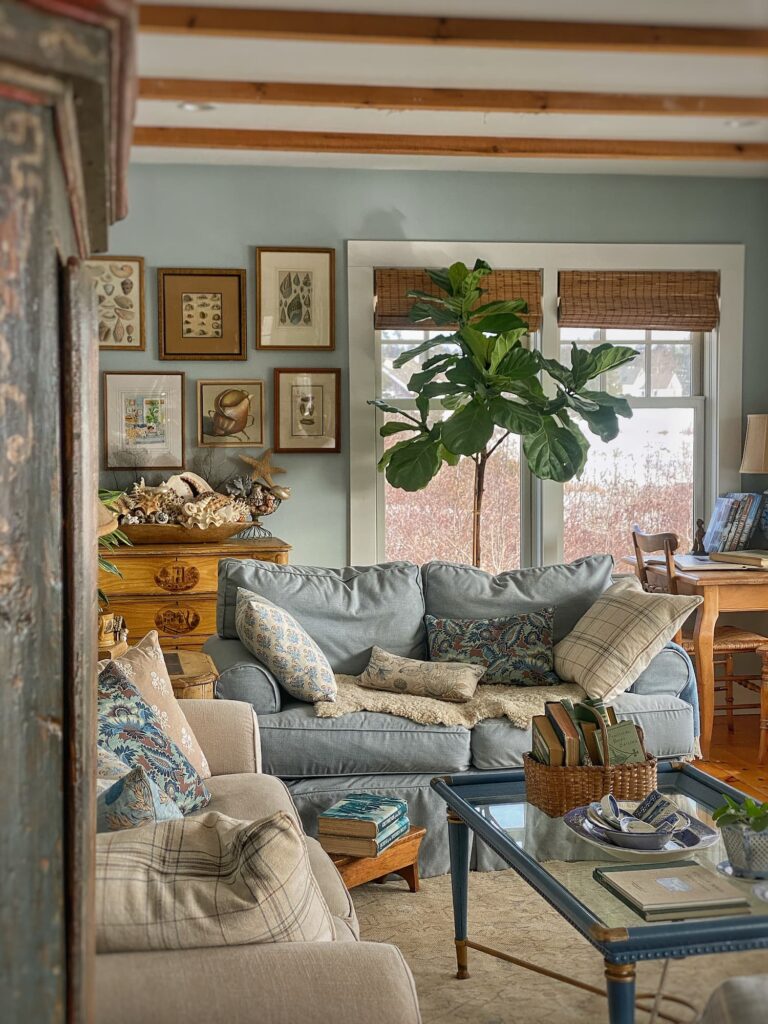
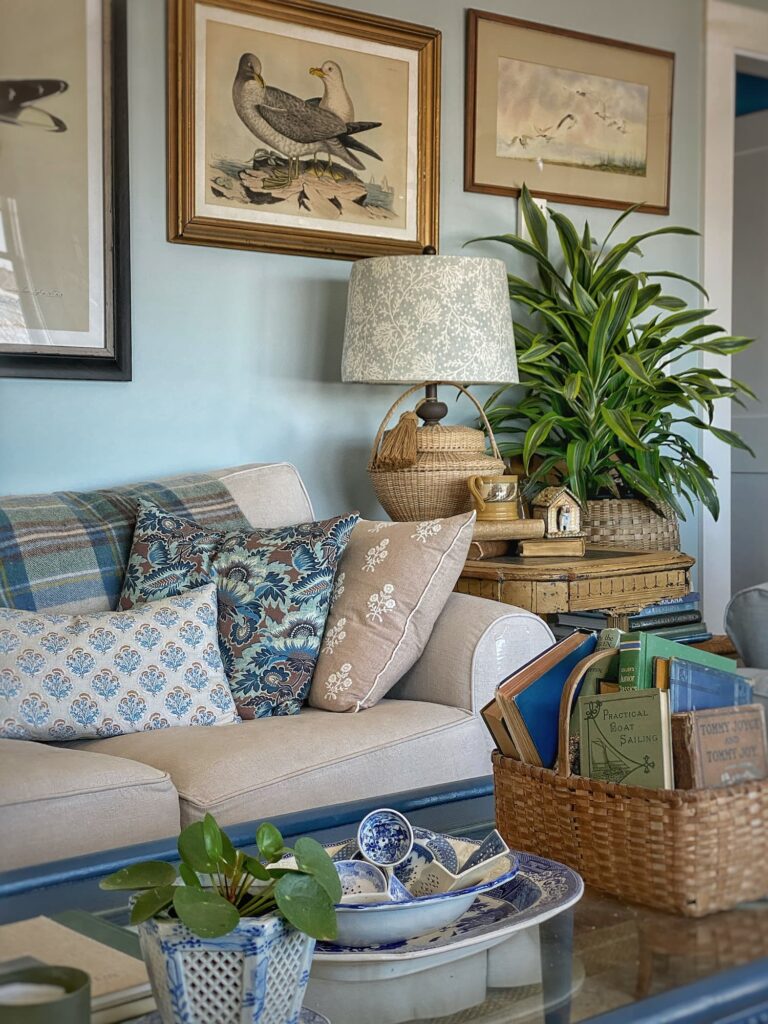
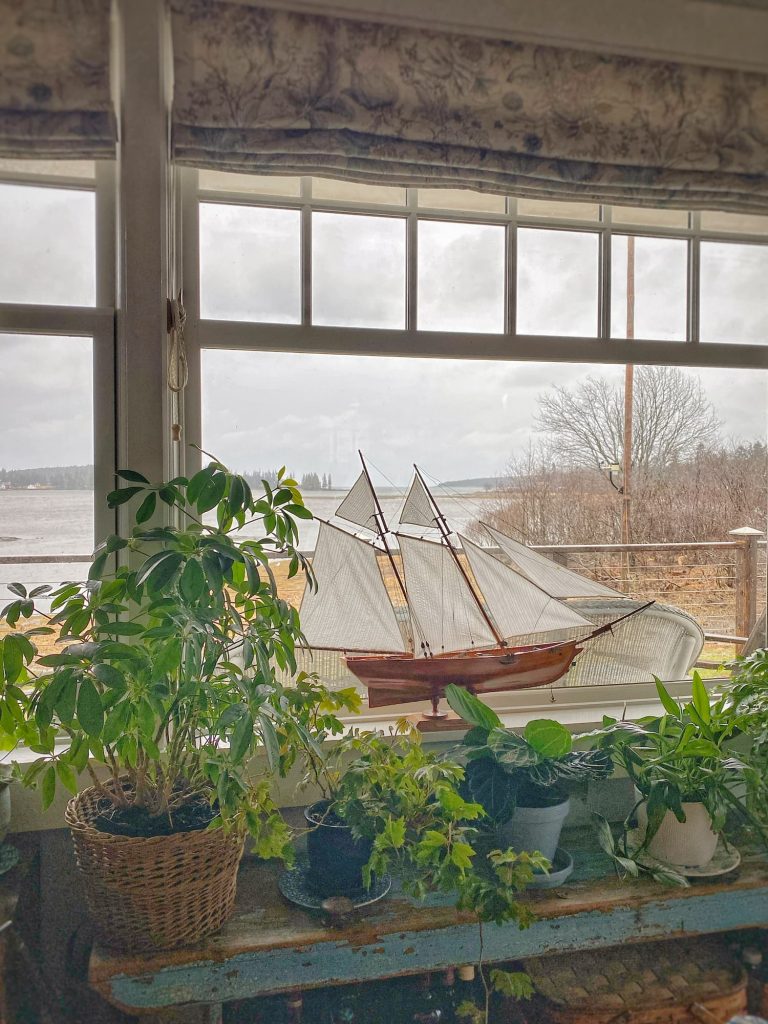
I never felt like I had much of a green thumb, but since moving to Maine, I’ve found myself accumulating houseplants. It started as a response to the long stretch of winter, when everything outside goes dormant. But they’ve since become an integral part of my style year-round.
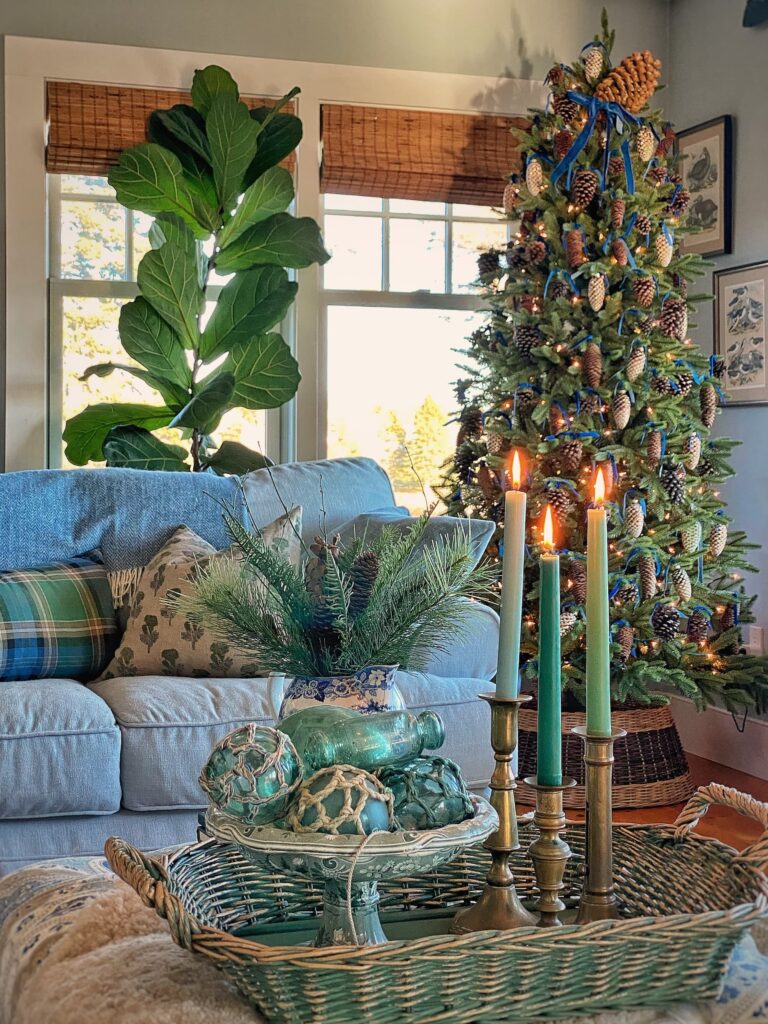
In the living room, I have a tall fiddle leaf fig as a focal point behind the sofa, and another large plant to hide the thermostat next to the loveseat. Recently, I added a small Chinese money plant to the coffee table.
Plants bring life and energy to a room. I’ve shared more about some of my easy-care favorites here.
9. Surfaces
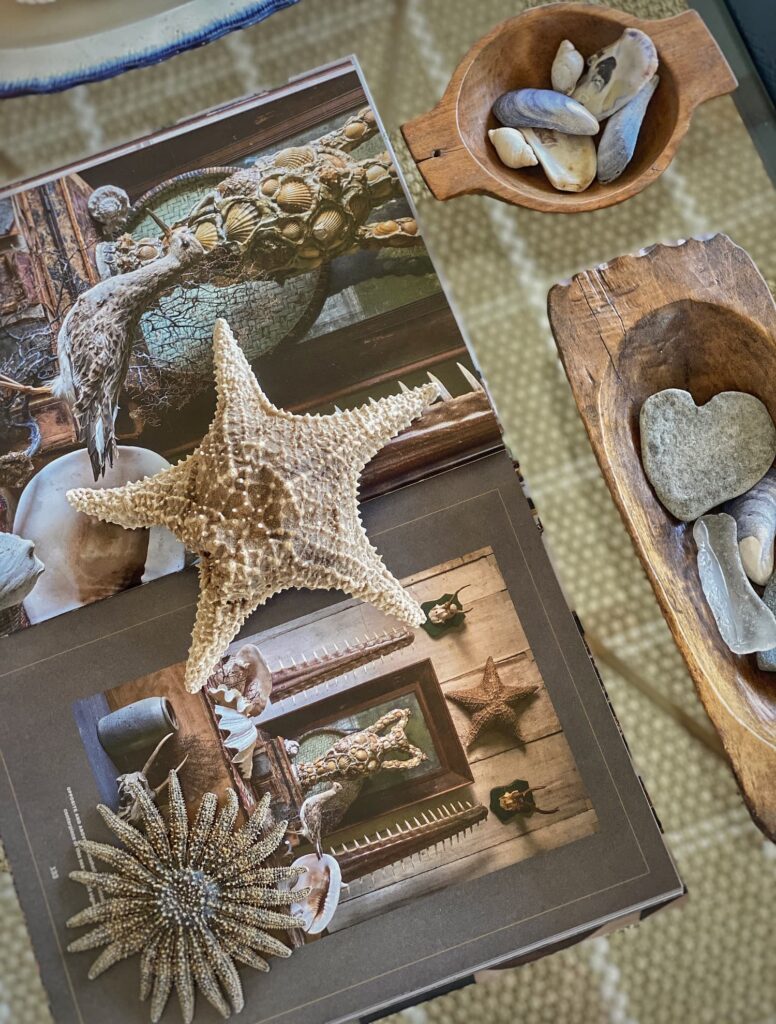
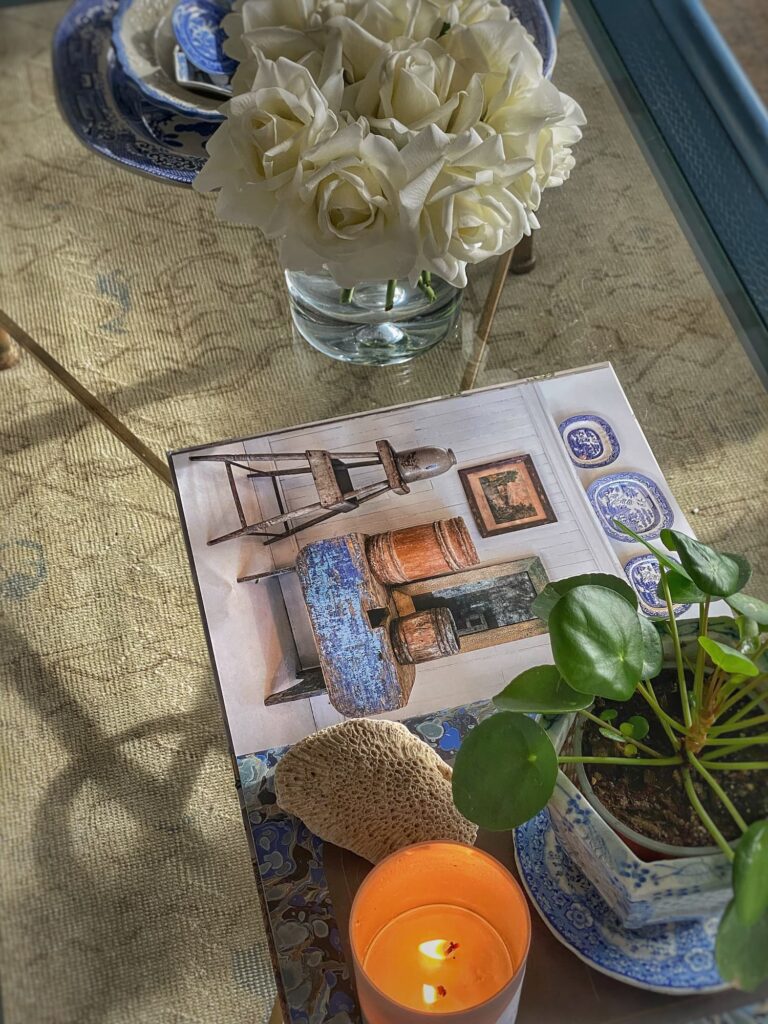
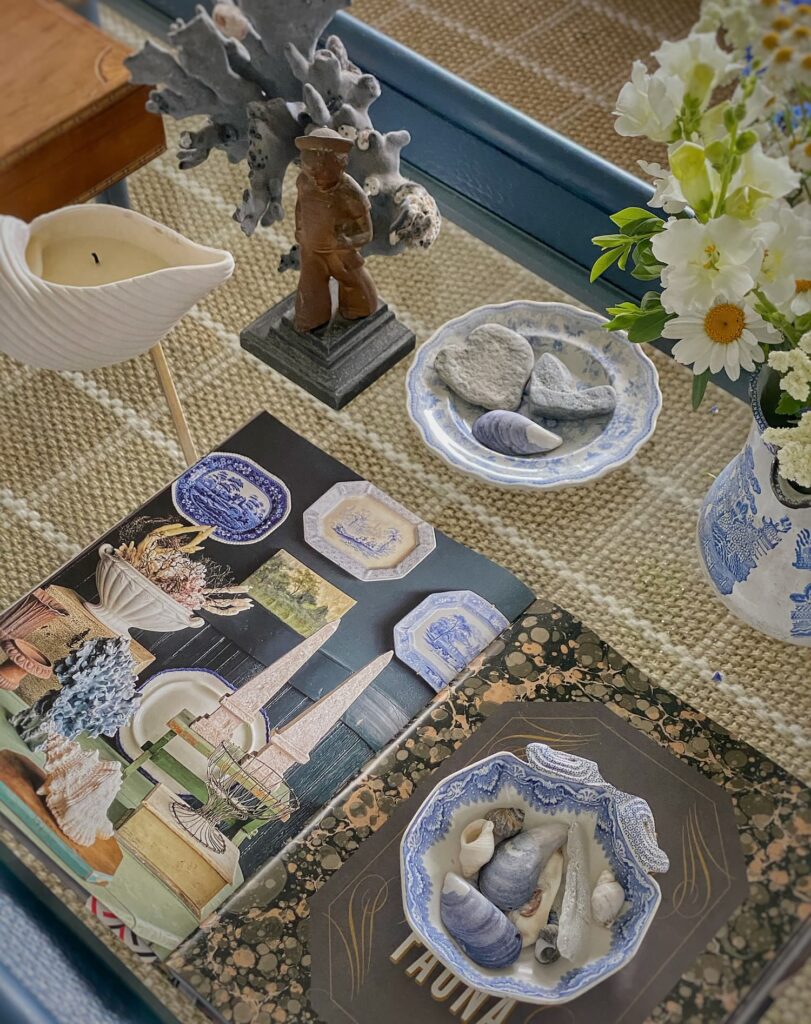
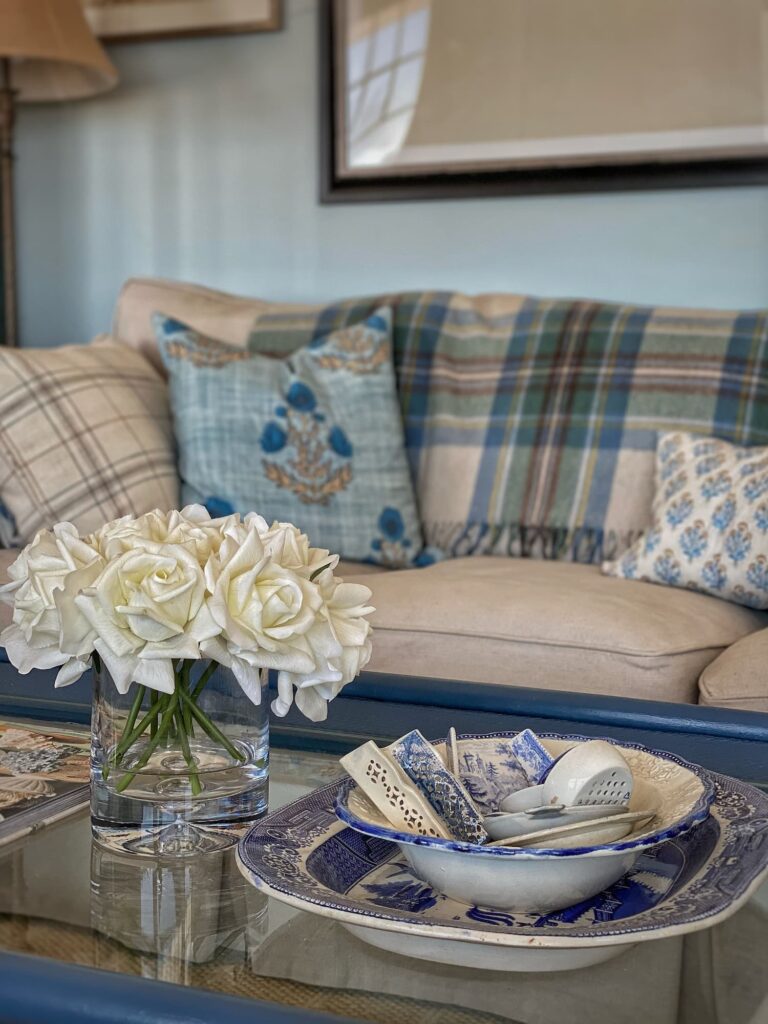
It’s no secret I like my things. In the living room, you’ll see them displayed on all the flat surfaces—shells piled in a dough bowl on the chest of drawers on the back wall, a platter filled with small blue and white dishes on the coffee table, and a flock (or squabble!) of carved wood seagulls perched on the blanket chest in front of the window. And of course, you all know how I love to decorate the fireplace mantel seasonally.
While no one would ever call me a minimalist, I avoid a cluttered look by grouping items tidily and intentionally, keeping balance and symmetry in mind.
This is something I do intuitively, but if you struggle with it, I’ll be sharing tips in another blog post soon. Stay tuned!
10. Repetition
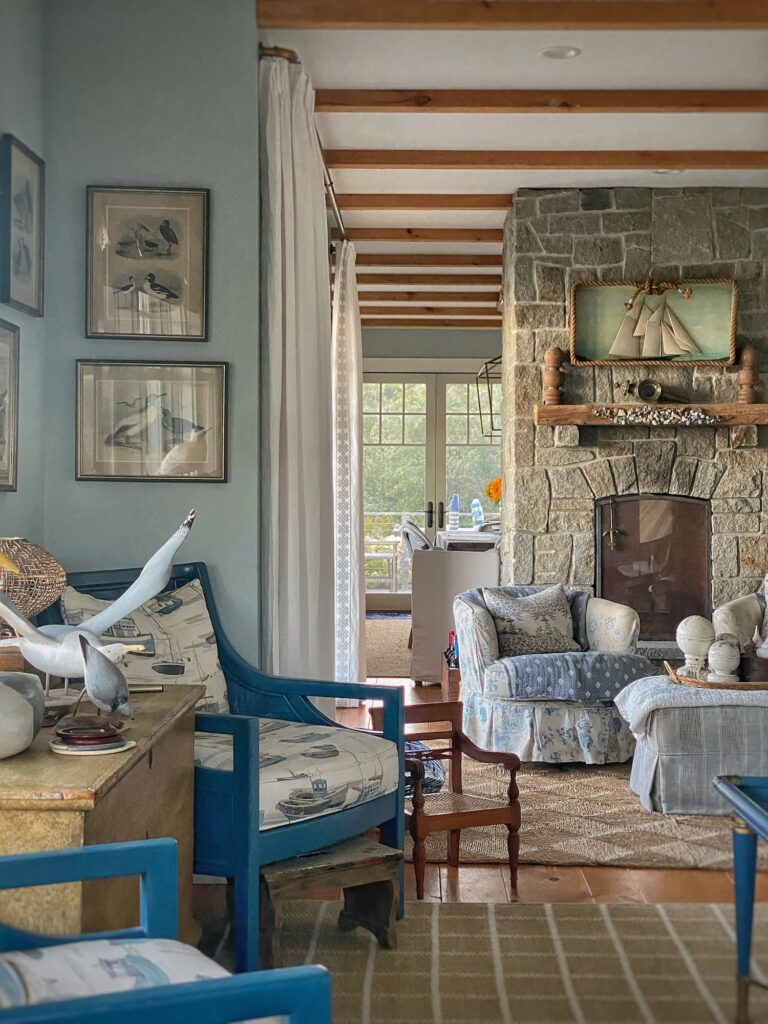
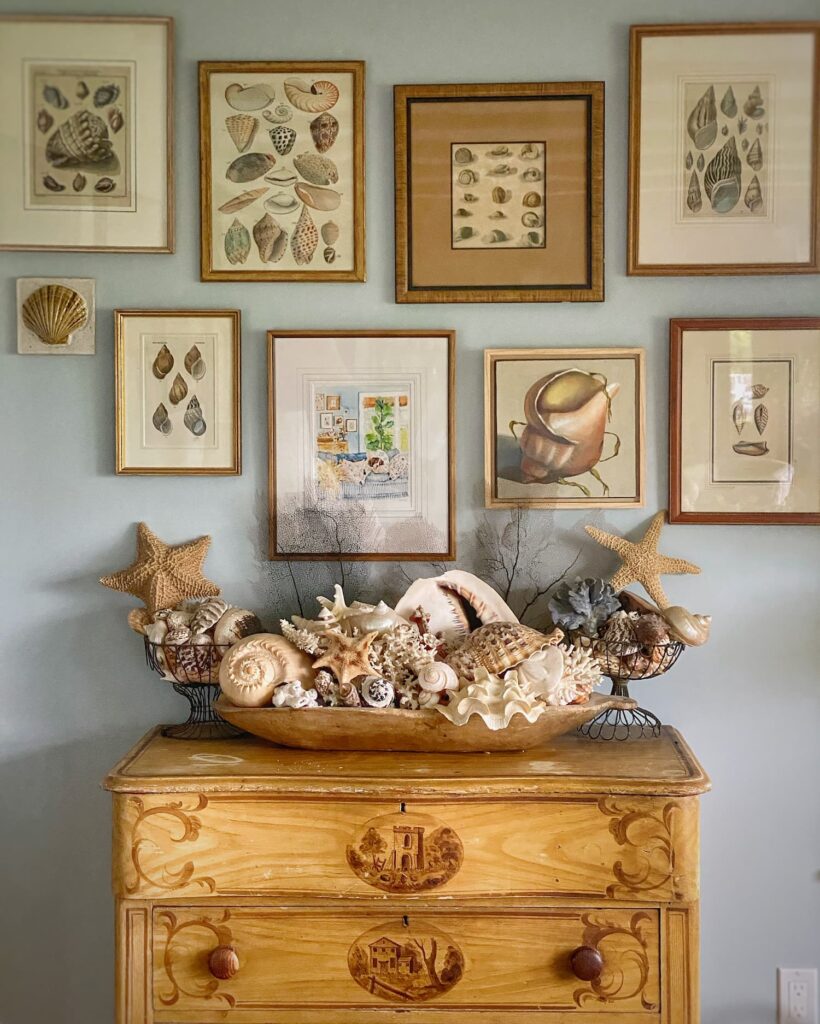
Another intentional way I style the things I collect is to repeat them throughout the room.
The majority of my shell decor is concentrated in one corner of the living room, but the motif reappears in small ways elsewhere—a piece of coral on the coffee table and a collection of small shells affixed to the wooden mantel.
Sometimes an element shows up in a different form. Seagull artwork appears on the walls, along with a collection of decoys. A grouping of blue and white dishes sits next to a book open to a page with an image of transferware.
This kind of repetition creates a natural flow. Every object is there for a reason and has a role in the room’s narrative.
11. Comfort
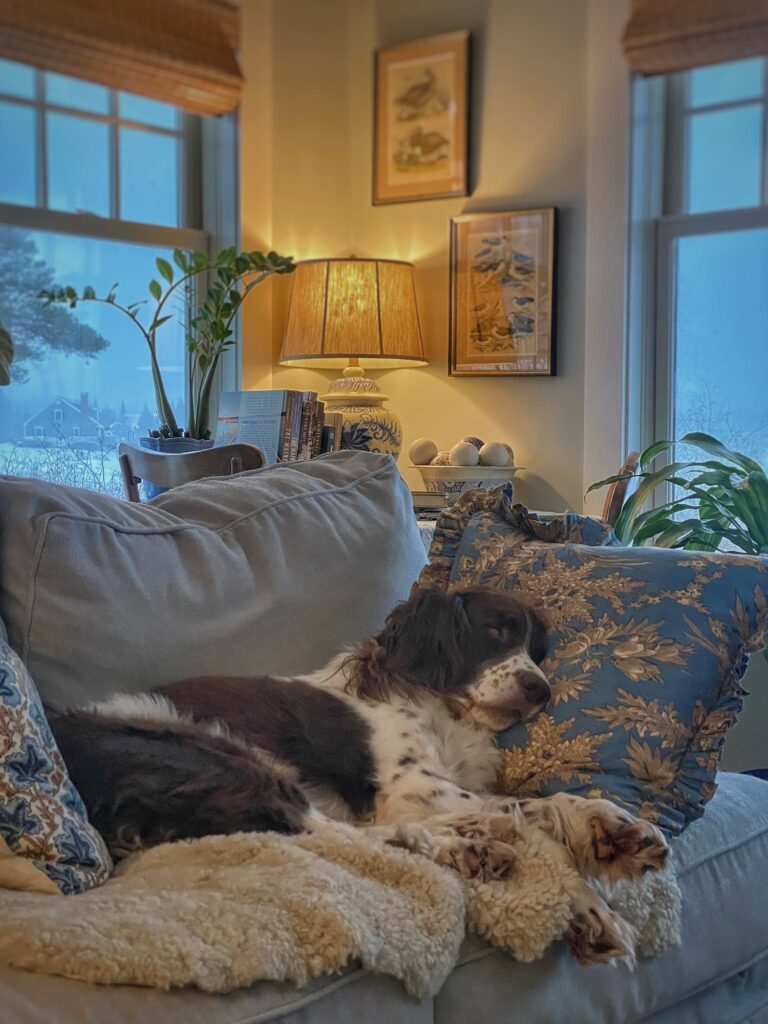
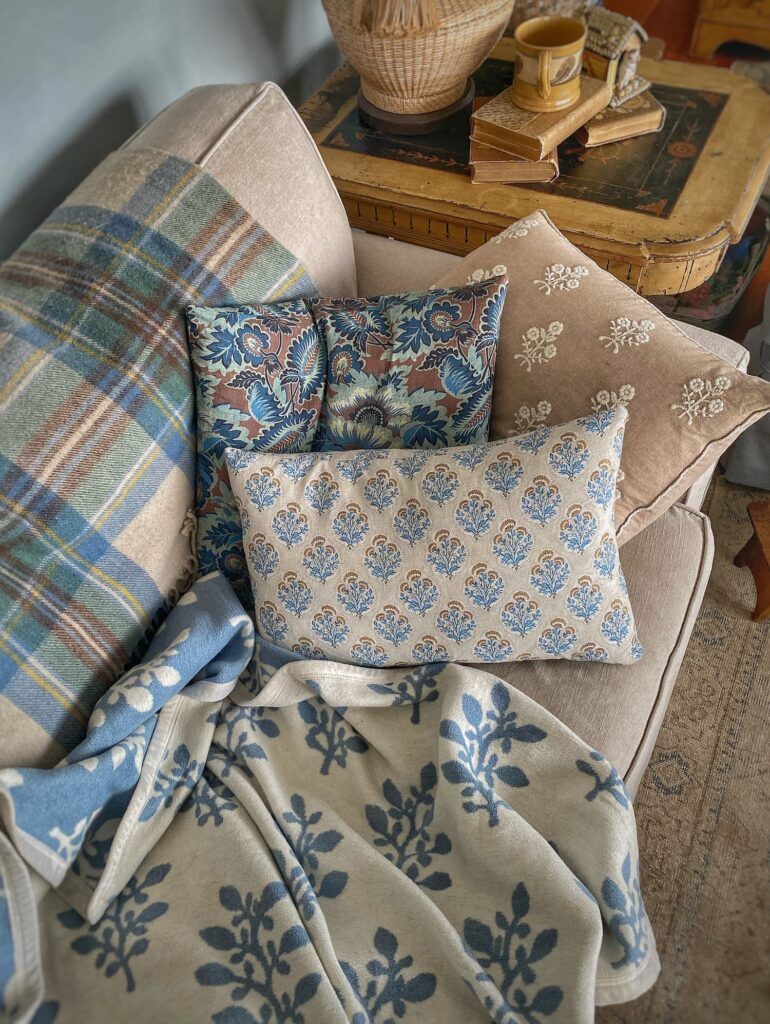
All this talk about texture, surface displays, repetition, stories, and style does not mean I ignore the most important factor in designing a room—comfort.
Living rooms are made for living. That includes pets, grandchildren, and my exhausted kids who come for a visit and just want to stretch out on the sofa and nap.
So that sofa is soft and covered in a washable slipcover. Throw pillows are for heads or tucking behind your back. The finish on antique furniture is already worn and broken in. And nothing is too precious for little toddler hands.
My home might be styled, but it is not perfect. And that is exactly how I like it.
12. Process

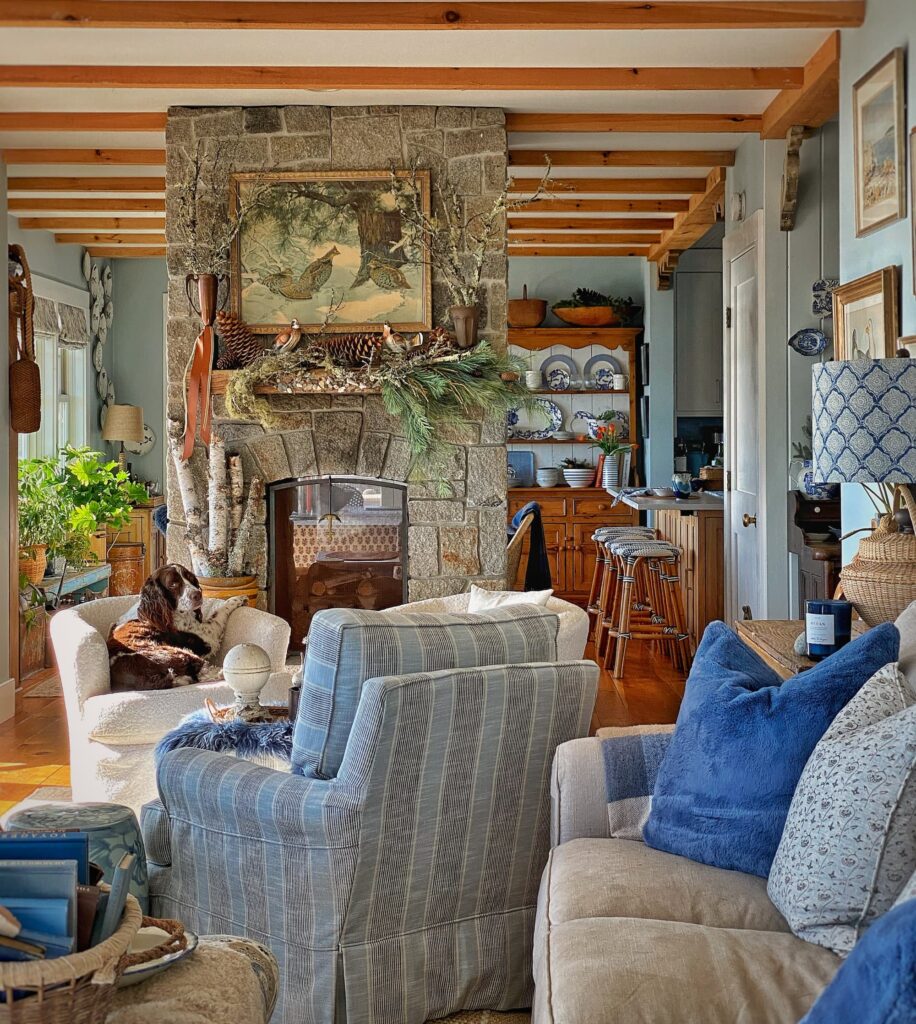
I know I have thrown a lot of things at you in this post. Even I feel a bit overwhelmed when I read back over it.
But the thing is, these aren’t hard and fast rules. And you don’t have to do all of it at once.
Design is a process and homes are always evolving. So maybe if you are repainting your walls or shopping for new (to you?!) furniture, you will keep a few of my ideas in mind. And when you are visiting antiques or home decor stores, remember to look for those things that speak to your heart and eye, then arrange them with intention.
A beautiful home that tells your own unique story comes together over time and is always changing (making room for that special piece you couldn’t live without).
Lastly, always, always have fun.
Zoë’s Living Room
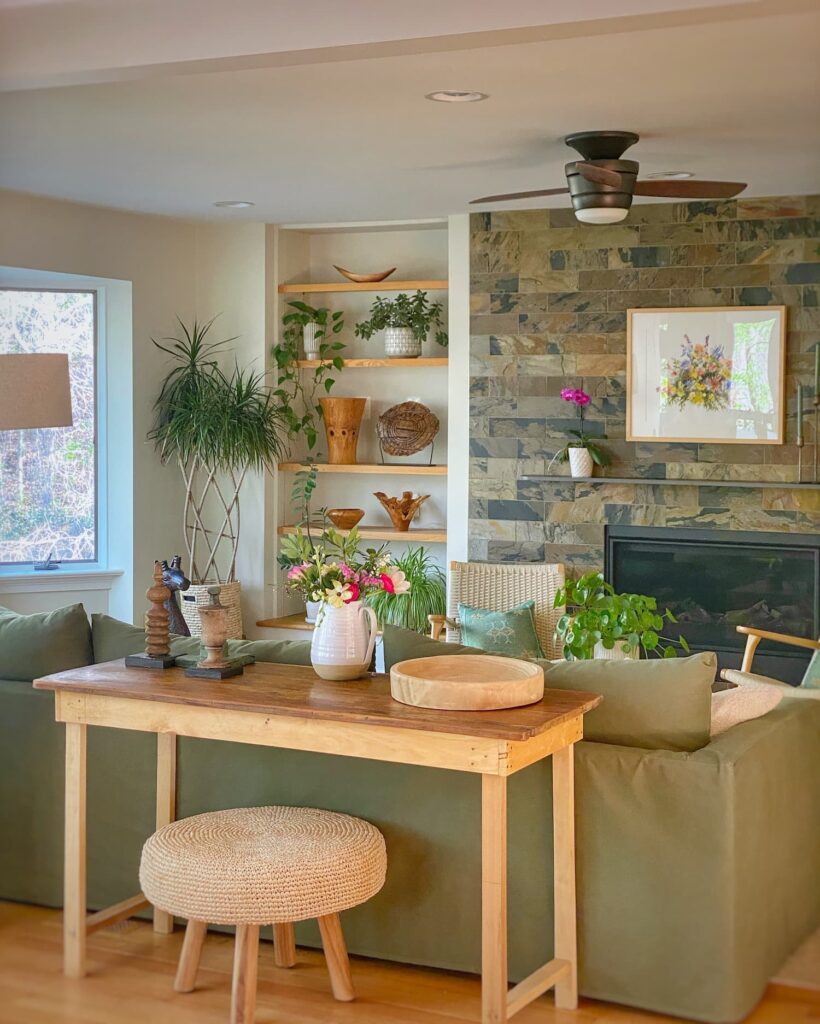
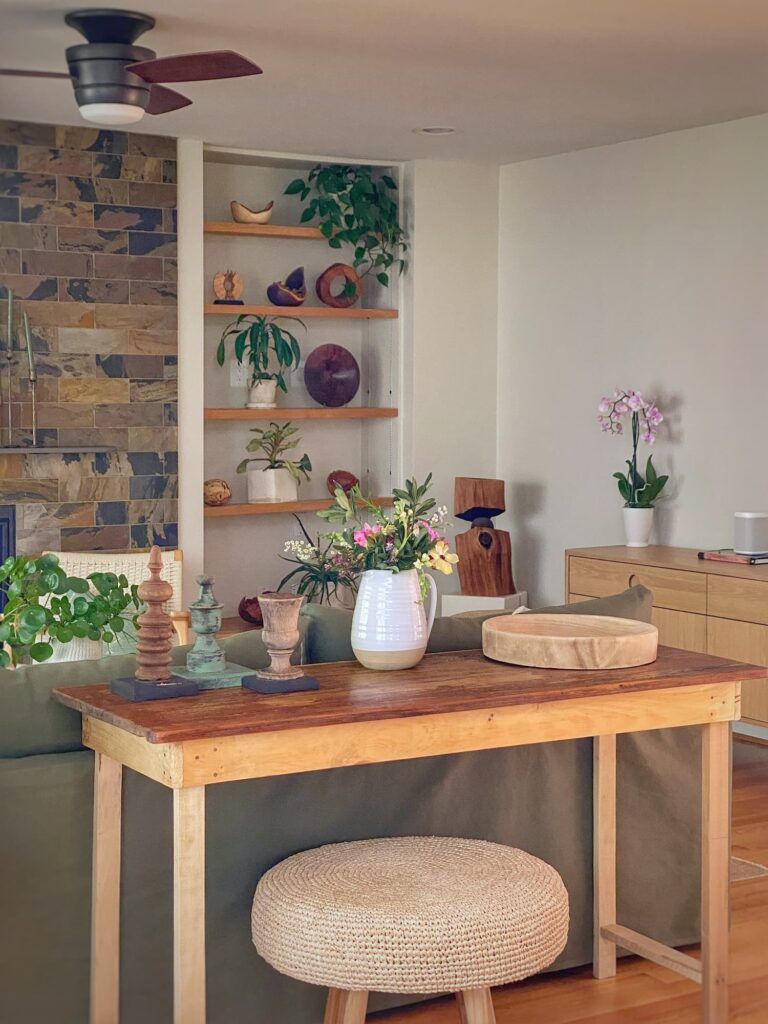
Before I release you from Molly-in-Maine Design School, I want to quickly show you a different take on this same design process.
My daughter Zoë has a clean Scandi aesthetic. Most people would say that our homes are very different. I think, though, that if you look closely at some of the design elements in her living room, you’ll see that “like mother, like daughter” does actually apply.
Like me, Zoë has a strong but limited color story in her living room—her green to my blue. Tans and whites play a supporting role, and her subtly patterned vintage rug acts as a simple foundation for the space. Natural wood furniture warms the room, with a few unique vintage pieces added for texture and interest. A large collection of wooden bowls is displayed on the built-in shelves. Houseplants throughout the room add life and echo the wooded scene outside her windows.
You can see more images of Zoë’s lovely home here and here.
This Week Into Next


I had a wonderful trip to Florida last week. I basked in the warmth of both the weather and time with old friends.
Spring is shaping up to be travel season for me, so I will be in and out here.
This weekend Leah and Jack are coming for a quick visit. Zoë won’t be joining us, as she has reached the no-travel point in her pregnancy. We will miss her, but I’m looking forward to time with two of my kids. We have plans for meals at St. George Pizza and The Alna Store, as well as a spa night with home facials. I’ll share all the details.
Next week I’m headed to Maryland for Poppy’s third birthday party and to pull together the new baby’s nursery. Of course I will share all of that with you too.
At the end of April I’ll be back in Minnesota for sweet little Mira’s birthday. (Yes, that’s two birthday crowns for me to sew…) I’m sure she has changed so much since I was there in January. And of course James always delights too.
Over Memorial Day weekend I’m meeting up with my cycling friends for a weekend in the saddle, then back to Maryland after the baby is born.
Phew! It’s a lot, but this is what life is all about.
Here at home April has been chilly and brown, as it always is. But I just tromped through the wet to the top of the field and spied a few tiny little lupine sprouts. Let the countdown begin!
Happy Easter and Passover to those who celebrate. May we embrace the hope of the season.
Be well, friends!

Questions, comments, or just want to say hello?
I’m always happy to hear from you.